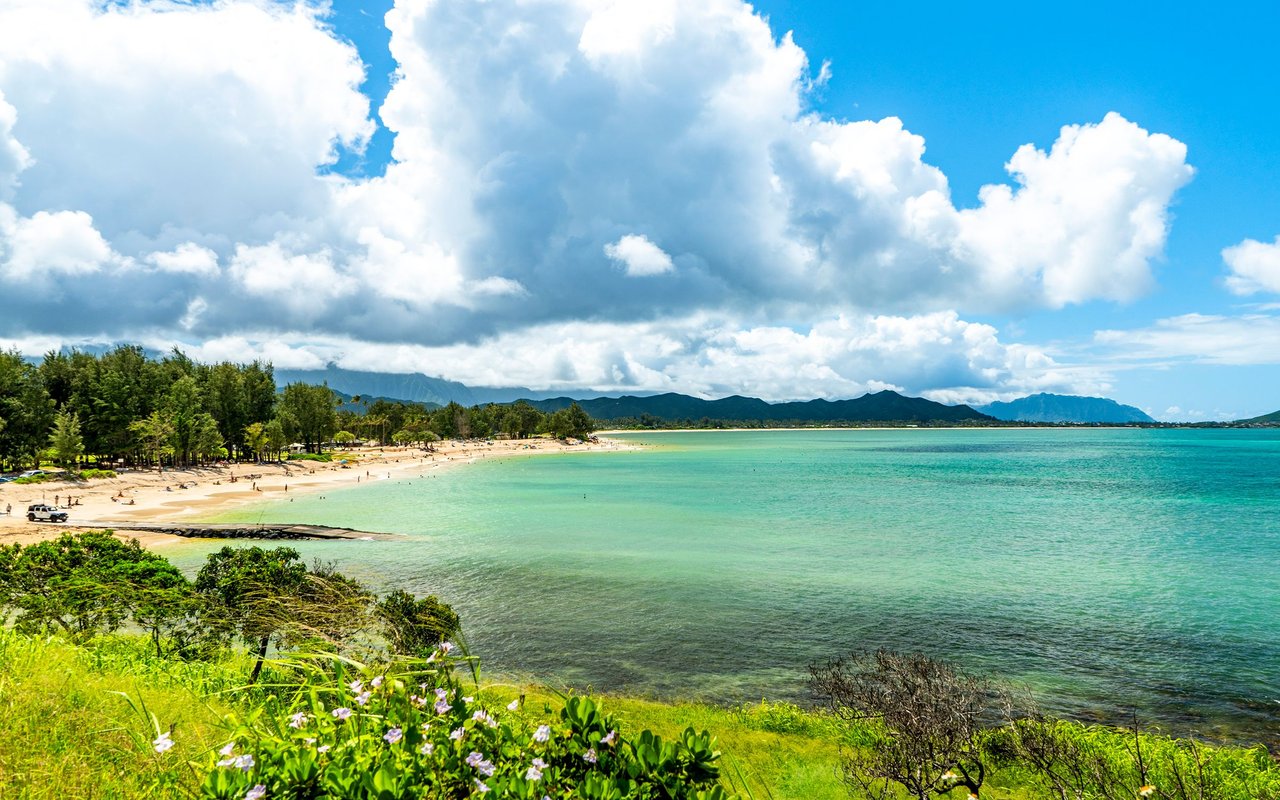
Located on the windward (eastern) side of Oʻahu, Kailua is a charming beach town that blends a relaxed, small-town Hawaiian vibe with easy access to Honolulu's urban amenities. Located roughly 12 miles northeast of downtown Honolulu, Kailua is set against the lush Koʻolau Mountain range and fronts some of the island's most beautiful shorelines. The town's warm tropical climate, steady trade winds, and lush scenery make it attractive year-round to outdoor enthusiasts and those seeking a quieter pace of life while remaining within commuting distance of the city.
The area is best known for its world-class beaches — Kailua Beach and nearby Lanikai Beach feature powdery white sand and clear turquoise water ideal for swimming, kayaking, paddleboarding, and wind-based sports. Many residents and visitors make regular trips to the Mokulua Islands (the "Mokes") via kayak, and popular short hikes like the Lanikai Pillbox trail offer spectacular coastal views. Kailua's abundant outdoor recreation options extend from gentle coastal walks and beach days to mountain trails in the Koʻolau range, creating a strong lifestyle emphasis on health, adventure, and nature.
Downtown Kailua maintains a friendly, community-oriented atmosphere with an assortment of boutiques, surf shops, cafés, and restaurants that range from casual plate-lunch spots to more elevated farm-to-table dining. Local farmers' markets and neighborhood events help foster tight community ties, and the town supports quality public and private schools. While Kailua feels decidedly local rather than tourist-driven, it still provides convenient services and amenities for residents and visitors alike.
Kailua's proximity to Marine Corps Base Hawaiʻi at Kāneʻohe Bay significantly shapes the local community and housing market. Many military service members and civilian employees choose to live in Kailua for the short commute and quality-of-life benefits; this contributes to a steady demand for rental housing and a degree of turnover as military families PCS (permanent change of station).
Real estate in Kailua reflects its desirability: beachfront and ocean-view properties command premium prices, and overall housing costs are higher than the U.S. average. Many residents commute to Honolulu for work, relying primarily on car travel with TheBus transit as an alternative; traffic on the island's main corridors can be heavy during peak hours. For buyers and renters seeking a laid-back, outdoor-focused lifestyle with beautiful beaches and a strong community feel, Kailua is one of Oʻahu's most appealing neighborhoods.
50,985 people live in Kailua, where the median age is 38.4 and the average individual income is $56,450. Data provided by the U.S. Census Bureau.
Total Population
Median Age
Population Density Population Density This is the number of people per square mile in a neighborhood.
Average individual Income
There's plenty to do around Kailua, including shopping, dining, nightlife, parks, and more. Data provided by Walk Score and Yelp.
Explore popular things to do in the area, including Dip Into Paradise, Honolulu Polo Club, and vive hair society.
| Name | Category | Distance | Reviews |
Ratings by
Yelp
|
|---|---|---|---|---|
| Dining | 3.9 miles | 6 reviews | 5/5 stars | |
| Active | 4.48 miles | 5 reviews | 5/5 stars | |
| Beauty | 0.41 miles | 12 reviews | 5/5 stars | |
| Beauty | 1.71 miles | 8 reviews | 5/5 stars | |
| Beauty | 0.43 miles | 7 reviews | 5/5 stars | |
|
|
||||
|
|
||||
|
|
||||
|
|
||||
|
|
||||
|
|
Kailua has 16,854 households, with an average household size of 2.93. Data provided by the U.S. Census Bureau. Here’s what the people living in Kailua do for work — and how long it takes them to get there. Data provided by the U.S. Census Bureau. 50,985 people call Kailua home. The population density is 2,346 and the largest age group is Data provided by the U.S. Census Bureau.
Total Population
Population Density Population Density This is the number of people per square mile in a neighborhood.
Median Age
Men vs Women
Population by Age Group
0-9 Years
10-17 Years
18-24 Years
25-64 Years
65-74 Years
75+ Years
Education Level
Total Households
Average Household Size
Average individual Income
Households with Children
With Children:
Without Children:
Marital Status
Blue vs White Collar Workers
Blue Collar:
White Collar: